

Implementing enterprise software is often complex, and Immorpos35.3 is no exception. Designed to streamline business operations, automate workflows, and provide advanced reporting, the software promises significant efficiency gains. However, many organizations struggle during deployment, and many Immorpos35.3 software implementations fail due to a combination of technical, organizational, and human factors. Challenges such as poor planning, inadequate training, and inadequate infrastructure often prevent businesses from realizing the system’s full potential.
Understanding why Immorpos35.3 implementations fail is essential for managers and IT teams aiming to avoid costly mistakes. This article explores common obstacles, highlights key software features, and provides practical strategies to ensure successful deployment. By addressing these issues proactively, organizations can improve adoption rates, reduce risks, and fully leverage the benefits of Immorpos35.3.
What is Immorpos35.3 Software
Immorpos35.3 Software may refer to a specific software version, platform, or implementation used to manage digital processes. Because reliable public information about Immorpos35.3 is limited, avoid assuming specific features or capabilities without verified documentation. Before adopting it, it’s essential to understand the software’s purpose, compatibility, configuration, and implementation requirements.
Understanding Immorpos35.3 Software
Like any business or technical software, a successful implementation depends on proper planning and a clear understanding of organizational requirements. Users should evaluate system compatibility, data requirements, security considerations, user permissions, and integration with existing tools. Documentation and testing can also help identify potential issues before introducing the software into a production environment.
Why Immorpos35.3 Software Implementations Fail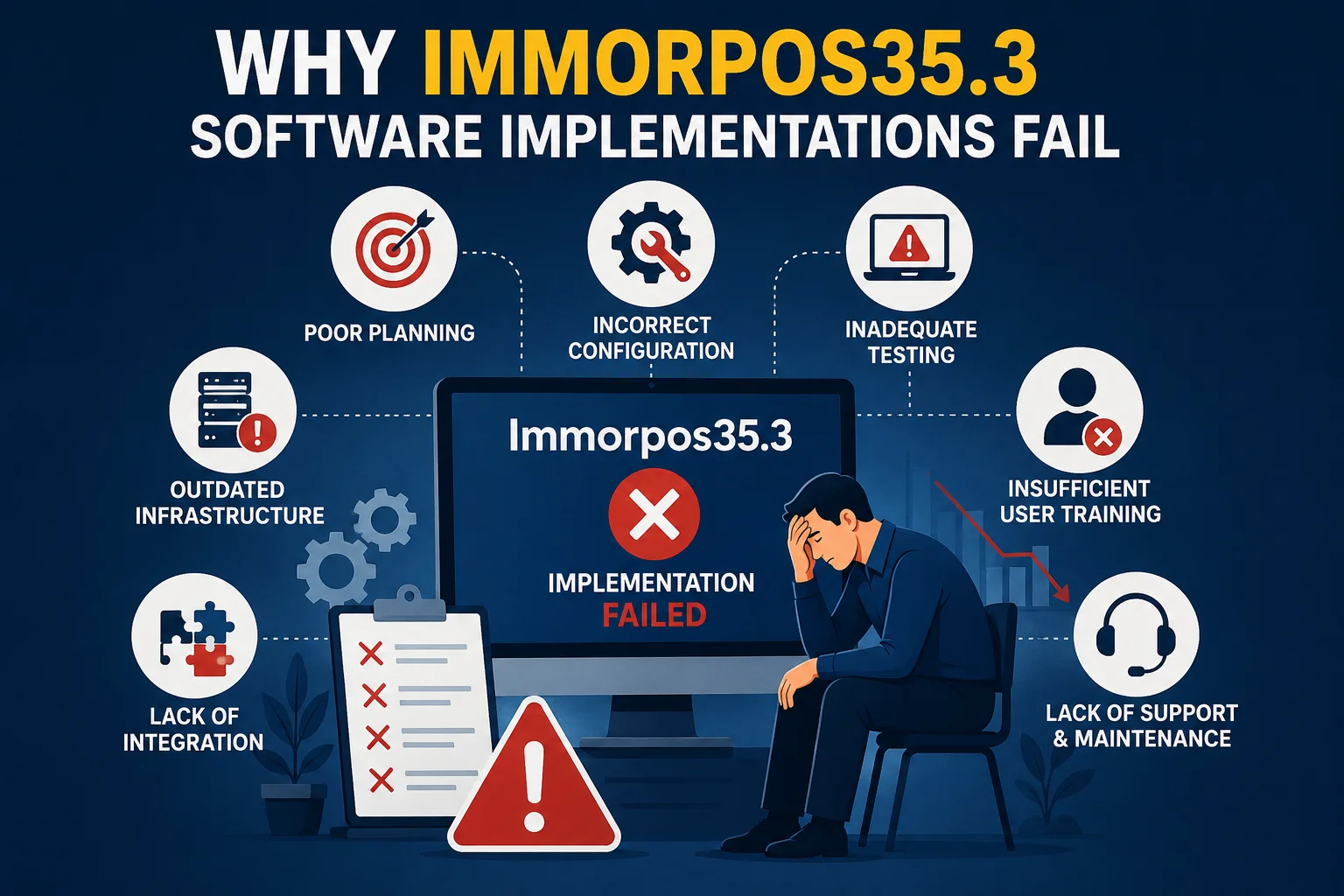
Several reasons can cause Immorpos35.3 Software Implementations to fail. Poor planning is one of the most common problems, particularly when organizations begin implementation without clearly defining their goals. Inadequate testing, incorrect configuration, outdated infrastructure, and compatibility issues can also create unexpected failures.
Another important factor is user training. Even technically sound software can perform poorly when employees do not understand how to use it correctly. Lack of ongoing maintenance and insufficient technical support may further increase operational problems.
How to Improve Implementation Success
Organizations can reduce implementation risks by starting with detailed requirements, testing the software in a controlled environment, and training users before deployment. Regular monitoring and documented troubleshooting procedures can also make it easier to identify and resolve problems.
Ultimately, understanding the software and preparing for potential technical and organizational challenges are key to a smoother, more reliable implementation.
How Immorpos35.3 Software Works
Immorpos35.3 operates as a centralized system that collects, processes, and analyzes data from various business operations in real time. It typically works through:
- Data Input: Information is entered manually or imported from existing systems.
- Process Automation: The software automates repetitive tasks, such as inventory updates, order processing, and notifications.
- Integration: Immorpos35.3 connects with other business tools, such as accounting or CRM systems.
- Reporting and Analytics: Generates dashboards, reports, and insights to support decision-making.
By consolidating multiple processes into a single platform, Immorpos35.3 aims to reduce operational inefficiencies. However, without proper planning, training, and technical readiness, many organizations encounter implementation failures.
Key Features of Immorpos35.3
Immorpos35.3 software offers a range of features designed to help businesses manage operations efficiently and make data-driven decisions. Understanding its key features is essential to see why some implementations succeed while others fail.
Inventory and Stock Management
Immorpos35.3 provides real-time inventory tracking, automated stock updates, and alerts for low or excess stock. This helps businesses reduce overstocking, prevent shortages, and keep operations running smoothly.
Workflow Automation
The software automates repetitive tasks, including order processing, invoice generation, and approval workflows. By reducing manual effort, organizations can save time, minimize errors, and increase productivity.
Reporting and Analytics
Immorpos35.3 includes advanced reporting tools that allow managers to generate detailed performance reports, financial summaries, and operational insights. Customizable dashboards help decision-makers quickly identify trends and opportunities.
Integration Capabilities
The software can integrate with other enterprise tools such as accounting software, CRM systems, and e-commerce platforms. Proper integration is crucial, and failure to do this correctly is one reason many Immorpos35.3 software implementations fail.
User Access Control
Immorpos35.3 allows administrators to set permissions and access levels for different users. This feature ensures data security, reduces unauthorized access, and maintains accountability across teams.
Scalability and Flexibility
The platform is designed to grow with the business, supporting multiple locations, additional users, and new modules. However, organizations often overlook scalability requirements, contributing to implementation challenges.
Customer Relationship Management (CRM)
Some versions of Immorpos35.3 include basic CRM tools to manage customer data, track interactions, and enhance customer service. Leveraging these features can improve client satisfaction and retention.
By highlighting these key features, businesses can better plan training, integration, and workflow adjustments. Ignoring these functionalities often wastes potential and is a common reason Immorpos35.3 software implementations fail.
Common Challenges in Software Implementation
Before diving into Immorpos35.3 specifically, it is important to understand common hurdles faced by any software project. Some of these challenges include:
- Resistance to change: Employees may prefer existing systems.
- Complex processes: Legacy workflows may not align with new software features.
- Resource constraints: Limited staff, time, or budget can hinder the project.
In the case of Immorpos35.3, software implementations fail; these challenges are often amplified. Companies may underestimate the effort required for full adoption or fail to align implementation strategies with organizational goals.
Technical Limitations of Immorpos35.3
Technical issues frequently contribute to failed implementations. Immorpos35.3 requires compatible hardware, stable network infrastructure, and sufficient system capacity. When organizations neglect these requirements, common problems include:
- Software crashes or slow performance.
- Incompatibility with existing systems.
- Bugs or untested features that interrupt workflows.
For example, a retail company attempting to integrate Immorpos35.3 without assessing server requirements experienced repeated downtime, resulting in operational delays and dissatisfied staff. Technical limitations are rarely the sole reason for failure; they often interact with other factors, exacerbating implementation risks.
Lack of Proper Training and User Adoption
Even the most robust software will fail if employees do not know how to use it. Insufficient training is a major reason Immorpos35.3 software implementations fail. Staff who feel unprepared or overwhelmed may:
- Revert to legacy processes.
- Make errors in data entry.
- Resist further changes.
Successful adoption requires structured training programs, clear documentation, and ongoing support. Companies that invest in user education and hands-on practice significantly reduce the likelihood of implementation failure.
Poor Project Management Practices
Project management plays a pivotal role in software success. When Immorpos35.3 software implementations fail, poor planning and oversight are often to blame. Critical project management shortcomings include:
- Unrealistic timelines that rush deployment.
- Failure to define objectives and KPIs.
- Miscommunication between IT and business teams.
A well-managed project includes a detailed implementation plan, assigned responsibilities, milestone tracking, and contingency strategies. Lack of these elements increases the risk of delays, budget overruns, and ultimately, project failure.
Data Migration and Integration Issues
Migrating data from legacy systems and integrating new software with existing tools is one of the most challenging aspects of implementation. When Immorpos35.3 software implementations fail, it is often because:
- Data is incomplete or inaccurate.
- Legacy formats are incompatible with new system requirements.
- Integration with third-party tools is not fully tested.
Errors in data migration can lead to operational disruptions, reporting inaccuracies, and loss of critical information. Organizations should conduct thorough data audits, test migration processes, and ensure compatibility before full deployment.
Insufficient Support and Vendor Communication
Vendor support is crucial during any software rollout. Many companies experience difficulties because they assume the software is self-sufficient. Common issues leading to Immorpos35.3 software implementations failing include:
- Limited vendor response for troubleshooting.
- Delays in resolving technical problems.
- Poor communication between vendor and internal teams.
Active collaboration with the software provider, clear escalation protocols, and regular check-ins can significantly improve the likelihood of successful implementation.
Cost Overruns and Budget Constraints
Financial factors also play a significant role. Organizations that underestimate deployment, training, or maintenance costs often face challenges. Budget constraints may result in:
- Cutting corners on training.
- Delayed updates or hardware upgrades.
- Inadequate testing of workflows.
Such financial limitations are a key reason why Immorpos35.3 software implementations fail. Companies must plan realistic budgets and include contingencies for unexpected expenses.
Strategies to Ensure Successful Implementation
While failures are common, there are proven strategies to mitigate risk:
- Comprehensive planning: Establish timelines, milestones, and KPIs.
- Staff training: Conduct workshops, tutorials, and continuous learning sessions.
- Technical readiness: Assess infrastructure and ensure compatibility.
- Pilot testing: Run small-scale trials to identify issues before full deployment.
- Vendor partnership: Maintain open lines of communication for support.
By proactively addressing these areas, organizations can significantly improve adoption rates and reduce the chances that Immorpos35.3 software implementations fail.
Conclusion
Immorpos35.3 software offers significant potential for improving operational efficiency and business performance. However, its successful implementation depends on more than just installing the system. When Immorpos35.3 software implementations fail, it is often due to a combination of technical, organizational, and human factors.
Companies that invest in planning, staff training, infrastructure readiness, and vendor collaboration are more likely to realize the software’s benefits. Learning from past failures, preparing thoroughly, and staying flexible are essential strategies to ensure future deployments succeed. By understanding these key factors, organizations can prevent costly setbacks and fully leverage the capabilities of Immorpos35.3.